Within Balloon Matches
How solved balloon cases train better triage
Resolved balloon cases give AI systems labelled examples for comparing motion, shape, lighting, wind alignment, and confidence scores.
On this page
- Why labelled balloon cases matter
- Features AI can compare across reports
- Using matches without overstating certainty
Page outline Jump by section
Introduction
AI-assisted UFO investigation becomes far more effective when the system can compare a new sighting against a large library of already solved balloon cases. Instead of treating every glowing orb, reflective object, or drifting light as unique, the software can ask a more practical question: does this report resemble earlier incidents that were ultimately explained by weather balloons, hobby balloons, advertising balloons, research payloads, or drifting foil objects?
 That comparison process matters because balloons repeatedly generate features that witnesses describe as anomalous. They can appear stationary, suddenly brighten, shift shape, seem to reverse direction, or produce strange infrared signatures depending on altitude, lighting, wind layers, and camera zoom. Public assessments released by the US All-domain Anomaly Resolution Office (AARO) explicitly reference this pattern, noting “morphological consistency” with earlier balloon imagery and motion “aligning with” wind-driven lighter-than-air behaviour.[AARO]aaro.milUAP ImageryAARO bases its assessment on the object's strong morphological consistency with other resolved imagery featuring balloons…
A well-structured balloon case library therefore acts less like a UFO archive and more like a forensic comparison database. The better the labelled examples, the faster investigators can separate likely ordinary objects from reports that genuinely remain difficult to explain.
Why labelled balloon cases matter
Most UFO triage systems fail when they rely only on keywords or witness impressions. Human descriptions are inconsistent. One observer may report a “metallic sphere”, another a “bright star-like craft”, and a third a “silent drone”, even when the underlying object was a drifting balloon seen under different conditions.
A solved-case library provides labelled reference material that helps AI systems move beyond language alone. Each archived balloon case can include:
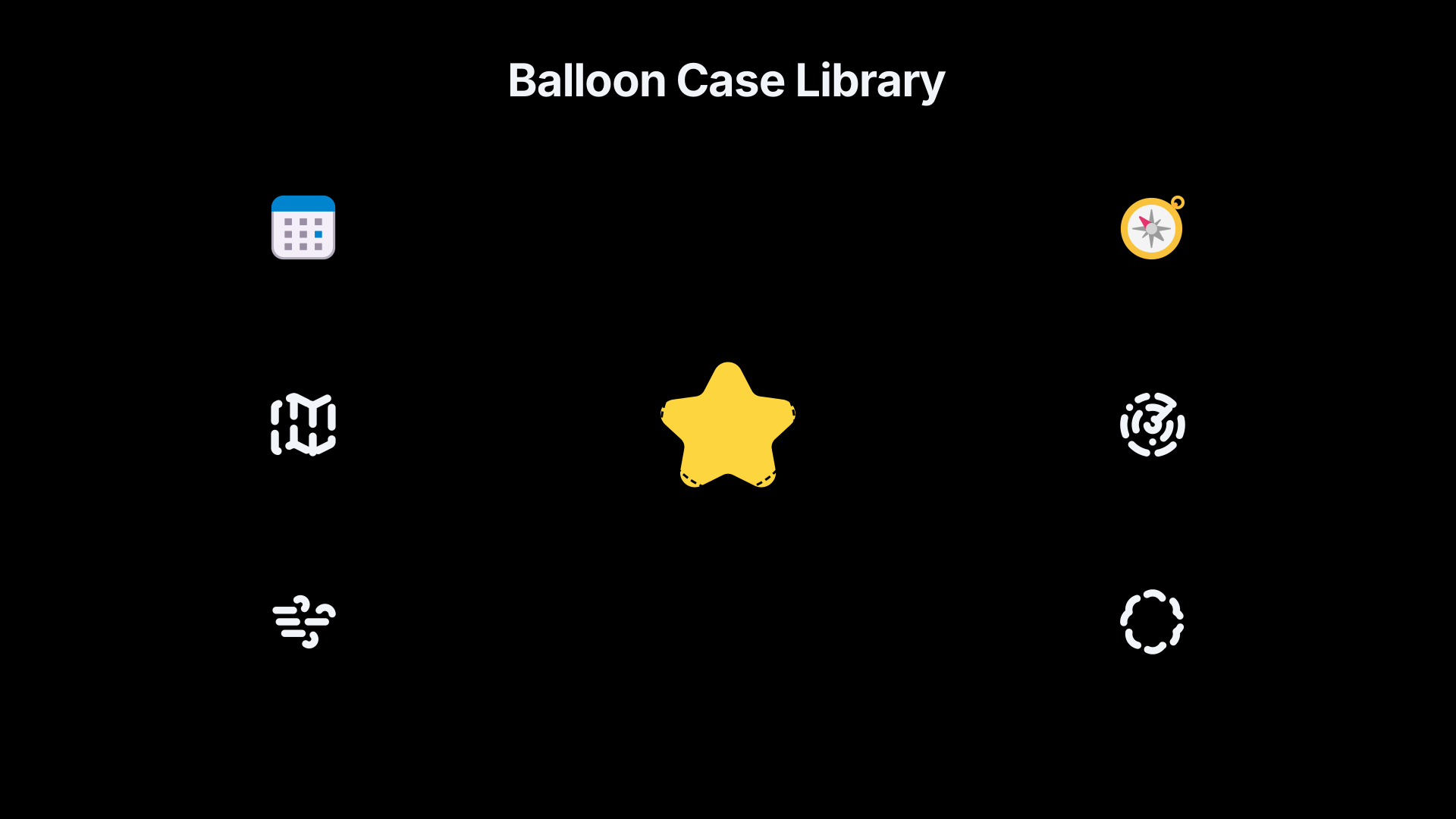
- Date and exact time
- Launch location if known
- Wind profiles at multiple altitudes
- Estimated drift path
- Witness viewing angle
- Shape descriptors
- Thermal appearance
- Radar visibility
- Lighting conditions
- Camera metadata
- Final confidence assessment
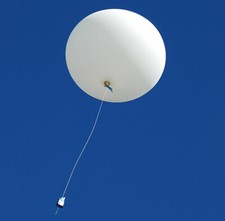
This matters because balloons behave in repeatable ways. A weather balloon ascending through layered winds can appear to zig-zag or abruptly change heading from a ground observer’s perspective. A foil party balloon rotating in sunlight can create rhythmic flashes that resemble controlled signalling. A high-altitude research balloon illuminated near sunset may remain visible long after surrounding aircraft disappear into darkness.
Without labelled examples, AI systems tend to over-weight novelty. With labelled examples, they can measure similarity.
Public weather-balloon infrastructure also makes this comparison process unusually data-rich. Radiosondes launched by meteorological agencies transmit wind and position information during ascent, creating extensive historical records for comparison. NOAA’s Integrated Global Radiosonde Archive contains observations from thousands of stations worldwide, including long-term wind and altitude records.[NCEI]ncei.noaa.govbservations from more than 2,800 globally distributed stations.Read more…
Because many launches occur on fixed schedules, investigators can correlate sightings against known release windows. The US National Weather Service notes that radiosondes are typically launched twice daily at standard observation times.[National Weather Service]WikipediaNational Weather Service - Wikipedia…[National Weather Service]WikipediaNational Weather Service - Wikipedia…
That routine behaviour is valuable for UFO triage because repeated launch patterns create predictable signatures in the data.
Features AI can compare across reports
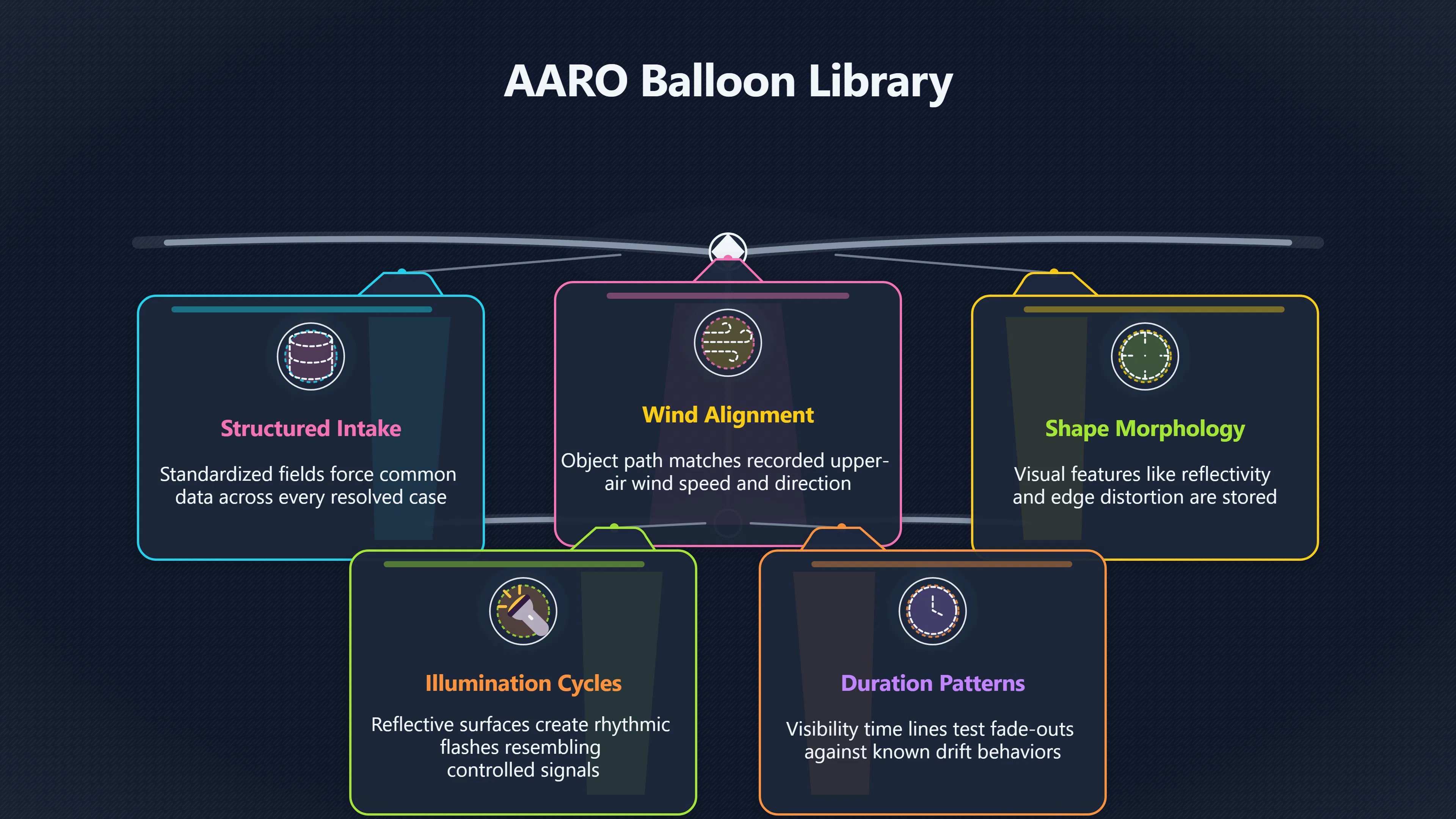
A strong balloon comparison library does not merely store images. The useful part is the structured feature extraction layered around each resolved case.
Motion against recorded winds
One of the strongest balloon indicators is alignment with upper-air wind data. Modern triage systems can compare reported movement against archived atmospheric conditions at different altitudes.
If witnesses report an object drifting north-east at roughly the same speed and direction as recorded winds at 30,000 feet, the confidence score for a balloon explanation rises significantly. If the object instead appears to move independently of surrounding winds, the balloon hypothesis weakens.
This is why upper-air data remain operationally important in meteorology. Radiosonde systems directly measure wind speed and direction throughout ascent.[National Weather Service]WikipediaNational Weather Service - Wikipedia…
A comparison engine can therefore test several questions automatically:
- Did the object’s path align with wind layers?
- Did apparent direction changes match altitude transitions?
- Was the estimated speed plausible for passive drift?
- Did the sighting duration fit expected balloon visibility?
These checks help prevent investigators from relying purely on visual impressions.
Shape and morphology
Balloons are deceptively variable in appearance. Depending on inflation level, viewing angle, lens zoom, glare, and atmospheric haze, the same object can appear spherical, triangular, cylindrical, or irregular.
AARO’s released assessments repeatedly emphasise shape similarity when identifying probable balloons.[AARO]aaro.milUAP Case Resolution ReportsOfficial UAP Imagery… This reconstruction also demonstrates that the objects traveled in a straight line at…
For an AI system, morphology becomes more useful when paired with contextual metadata. A silver sphere photographed near sunset may visually resemble multiple unrelated objects. But if similar archived balloon cases also showed:
- identical reflective hotspots,
- matching edge distortion,
- slow drift,
- and strong wind alignment,
the combined similarity score becomes much more informative.
Well-designed libraries therefore store both raw imagery and extracted visual features such as:
- contour stability,
- reflectivity patterns,
- rotational flicker,
- thermal bloom,
- edge softness,
- and frame-to-frame deformation.
This allows the system to compare behaviour rather than only appearance.
Illumination behaviour
Many unresolved UFO reports involve unusual light behaviour rather than unusual motion. Balloons frequently create misleading lighting effects because reflective surfaces rotate unpredictably in moving air.
A drifting foil balloon may alternate between dark and extremely bright states within seconds. High-altitude balloons can remain sunlit after local sunset. Infrared systems may show inconsistent heat signatures depending on material composition and viewing geometry.
A labelled case library helps AI systems recognise these recurring optical patterns. Instead of treating sudden brightening as evidence of acceleration or propulsion, the software can compare it against known reflectivity cycles from archived balloon footage.
This is especially important because witness testimony often interprets lighting changes as intentional manoeuvring.
Duration and disappearance patterns
Balloons also generate repeatable visibility timelines. A passive object drifting into cloud, haze, or shadow may appear to vanish abruptly. Ascending weather balloons can shrink below visual detection surprisingly quickly despite remaining airborne.
A comparison system can therefore test whether a sighting’s duration resembles earlier solved cases. For example:
- short-duration daylight glints,
- long twilight visibility,
- gradual fade-outs,
- or abrupt reflective disappearance events.
These patterns become stronger evidence when repeated across hundreds or thousands of labelled examples.
Building a practical balloon case library
A useful UFO-triage library needs more than a folder of solved incidents. The key challenge is standardisation.
If one archived case contains precise wind data and another only includes a vague witness summary, the comparison engine cannot evaluate them consistently. Modern investigation workflows therefore benefit from structured intake schemas that force common fields across every resolved balloon case.
Typical fields include:
Data categoryUseful structured inputsObservation timingUTC timestamp, local sunset conditions, durationLocationWitness coordinates, viewing direction, elevation angleAtmospheric contextWind profiles, cloud cover, visibility, jet-stream dataObject behaviourDrift rate, altitude estimate, heading changesVisual appearanceColour, reflectivity, shape transitions, blinking behaviourSensor evidenceRadar returns, infrared signature, camera metadataResolution outcomeConfirmed balloon, probable balloon, uncertain balloon match
This structure allows machine-learning systems to compare reports quantitatively rather than narratively.
The strongest libraries also preserve uncertainty instead of forcing binary outcomes. A case may be tagged as:
- confirmed balloon,
- highly probable balloon,
- possible balloon,
- insufficient evidence,
- or unresolved.
That distinction matters because overstating certainty contaminates future comparisons. If weakly evidenced cases are incorrectly labelled as solved, the system may start treating genuinely unusual reports as ordinary by default.
Using matches without overstating certainty
A balloon match is not the same thing as a definitive identification. Good triage systems treat comparisons as probabilistic guidance rather than automatic debunking.
This distinction is important because some UFO investigations have historically suffered from overconfident explanation assignment. Once an object is labelled a “weather balloon”, investigators may stop checking other possibilities even when the evidence remains incomplete.
Modern AI-assisted workflows can reduce that problem by exposing the underlying reasoning instead of presenting a single opaque verdict.
A transparent comparison system might report:
- 82% similarity to archived weather-balloon trajectories,[vlab.noaa.gov]vlab.noaa.govthe trusty weather balloonTrusty Weather Balloon8 Dec 2019 — They are filled with hydrogen or helium, and once launched, the balloon will typically ascend to an al…
- strong wind alignment,
- moderate visual similarity,
- but weak confidence in altitude estimation.
That approach helps investigators understand where the explanation is strong and where uncertainty remains.
AARO’s public language reflects this graded approach. Its statements commonly use phrases such as “almost certainly” and specify confidence levels rather than claiming absolute proof.[AARO]aaro.milUAP ImageryAARO bases its assessment on the object's strong morphological consistency with other resolved imagery featuring balloons…
That style is important for public trust. Balloon libraries are most useful when they accelerate elimination of ordinary explanations without turning into a reflexive dismissal mechanism.
Why balloon libraries improve investigation speed
The operational advantage of solved-case libraries is speed.
Without automated comparison, investigators may spend hours manually checking wind data, launch schedules, astronomical conditions, and historical sightings for each new report. With a mature comparison system, much of that screening can happen automatically within minutes.
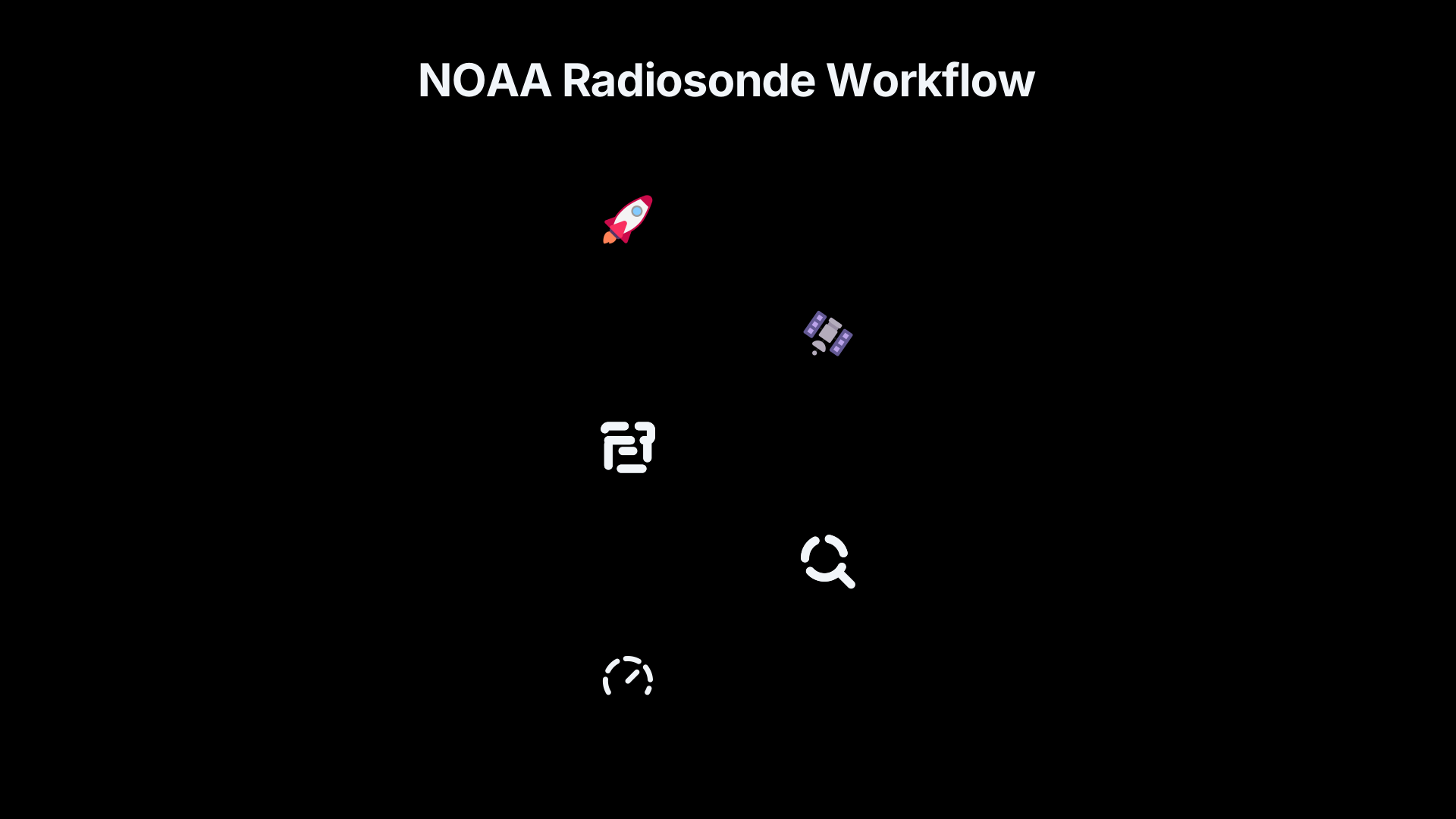
A modern workflow can:
- Ingest a witness report.
- Pull historical upper-air weather data.[weather.gov]weather.govNational Weather ServiceUpper-air Observations ProgramRadiosondes provide upper-air data that are essential for weather forecasts, resear…
- Compare the motion against archived balloon trajectories.
- Analyse image morphology against known balloon footage.
- Score similarity across previous solved incidents.
- Flag the case for rapid mundane explanation review.
This does not eliminate human investigation. Instead, it prioritises investigator attention.
Cases with extremely strong balloon similarity can move quickly into likely-explained review queues. Cases that resist comparison despite complete environmental checks can receive deeper analysis.
That distinction is central to AI-assisted UFO investigation. The goal is not to force every report into a mundane category. The goal is to identify ordinary explanations efficiently enough that genuinely difficult cases become easier to isolate and study.
Amazon book picks
Further Reading
Books and field guides related to How solved balloon cases train better triage. Use these as the next step if you want deeper reading beyond the article.
UFOs: Generals, Pilots, and Government Officials Go on the Re...
Anchors the page in serious UFO case assessment.
The Demon-Haunted World
Supports careful comparison of mundane explanations before anomaly claims.
The Signal and the Noise
Strong fit for AI triage and pattern matching in solved cases.
eBay marketplace picks
Marketplace Samples
Example marketplace items related to this page. Use the search link to explore similar finds on eBay.


Endnotes
1.
Source: aaro.mil
Link:https://www.aaro.mil/UAP-Cases/Official-UAP-Imagery/
Source snippet
UAP ImageryAARO bases its assessment on the object's strong morphological consistency with other resolved imagery featuring balloons...
2.
Source: ncei.noaa.gov
Link:https://www.ncei.noaa.gov/products/weather-balloon/integrated-global-radiosonde-archive
Source snippet
bservations from more than 2,800 globally distributed stations.Read more...
3.
Source: ncei.noaa.gov
Link:https://www.ncei.noaa.gov/products/weather-balloon
Source snippet
BalloonThese data are obtained from radiosondes, which are instrument packages tethered to balloons that are launched from the ground, as...
4.
Source: weather.gov
Link:https://www.weather.gov/upperair/
Source snippet
National Weather ServiceUpper-air Observations ProgramRadiosondes provide upper-air data that are essential for weather forecasts, resear...
5.
Source: weather.gov
Link:https://www.weather.gov/rah/virtualtourballoon
Source snippet
National Weather ServiceCollecting Meteorological Data by Radiosonde or...In North Carolina, radiosondes are launched twice daily from G...
6.
Source: weather.gov
Link:https://www.weather.gov/ilx/ua-tour
Source snippet
National Weather ServiceWhat Goes Into the Weather Balloon Launches?The National Weather Service in Lincoln launches weather balloons twi...
7.
Source: weather.gov
Link:https://www.weather.gov/upperair/factsheet
Source snippet
National Weather ServiceRadiosonde ObservationRadiosondes provide a primary source of upper-air data and will remain so into the foreseea...
8.
Source: noaa.gov
Link:https://www.noaa.gov/
Source snippet
National Oceanic and Atmospheric Administration HomeWeather · Climate · Ocean & Coasts · Fisheries · Satellites · Research · Marine & Avi...
9.
Source: noaa.gov
Link:https://www.noaa.gov/jetstream/upperair/radiosondes
Source snippet
Sep 16, 2025 — The radiosonde is a small instrument package that is suspended below balloon filled with either hydrogen or helium. As the...
10.
Source: ncei.noaa.gov
Link:https://www.ncei.noaa.gov/access/metadata/landing-page/bin/iso?id=gov.noaa.ncdc%3AC00145
Source snippet
of Winds Aloft - WBAN 120Provisions exist on these forms for listing wind direction and speed at heights up to 42,000 meters. The first p...
11.
Source: vlab.noaa.gov
Title: the trusty weather balloon
Link:https://vlab.noaa.gov/web/nws-heritage/-/the-trusty-weather-balloon
Source snippet
Trusty Weather Balloon8 Dec 2019 — They are filled with hydrogen or helium, and once launched, the balloon will typically ascend to an al...
12.
Source: wpo.noaa.gov
Title: windborne weather balloon reaches new heights
Link:https://wpo.noaa.gov/windborne-weather-balloon-reaches-new-heights/
Source snippet
Weather Balloon Reaches New Heights...With an average flight time of 7 days and a maximum flight time of 16, the balloons are capable of...
13.
Source: aoml.noaa.gov
Title: upper air observations
Link:https://www.aoml.noaa.gov/upper-air-observations/
Source snippet
Air Observations: How Weather Balloons Improve...1 Sept 2017 — Weather balloons, also known as radiosondes, provide detailed and reliabl...
14.
Source: weather.gov
Link:https://www.weather.gov/
15.
Source: weather.gov
Link:https://www.weather.gov/gjt/education_corner_balloon
Source snippet
Education Corner weather balloonWeather balloons carry an instrument called a radiosonde which is tracked by specialized ground equipment...
16.
Source: weather.gov
Link:https://www.weather.gov/chs/upperair
Source snippet
Weather Balloon / Upper Air ObservationsThe NWS at Charleston, SC conducts rawinsonde observations at least twice a day. Balloons are lau...
17.
Source: aaro.mil
Link:https://www.aaro.mil/UAP-Cases/UAP-Case-Resolution-Reports/
Source snippet
UAP Case Resolution ReportsOfficial UAP Imagery... This reconstruction also demonstrates that the objects traveled in a straight line at...
18.
Source: tspr.org
Title: national weather service cuts forecast midwest storms
Link:https://www.tspr.org/2025-04-02/national-weather-service-cuts-forecast-midwest-storms
Source snippet
'Unprecedented' cuts to Midwest weather balloon launches...2 Apr 2025 — National Weather Service offices across the country are suspendi...
19.
Source: Wikipedia
Title: National Weather Service
Link:https://en.wikipedia.org/wiki/National_Weather_Service
Source snippet
National Weather Service - Wikipedia...
20.
Source: Wikipedia
Title: Weather balloon
Link:https://en.wikipedia.org/wiki/Weather_balloon
Source snippet
Weather balloonBalloons meant to stay at a constant altitude for long periods are known as transosondes. Weather balloons that do not...
21.
Source: Wikipedia
Link:https://en.wikipedia.org/wiki/Radiosonde
Source snippet
RadiosondeA radiosonde is a battery-powered telemetry instrument carried into the atmosphere usually by a weather balloon that measure...
22.
Source: facebook.com
Link:https://www.facebook.com/NOAA/
Source snippet
National Oceanic and Atmospheric Administration (NOAA)National Oceanic and Atmospheric Administration (NOAA), Washington D. C. 730492 lik...
23.
Source: spectrumlocalnews.com
Link:https://spectrumlocalnews.com/us/snplus/weather/2025/03/26/noaa-national-weather-service-suspends-balloon-launches
Source snippet
National Weather Service cuts back weather balloon...Mar 26, 2025 — These balloons reach up to 100,000 feet in the atmosphere with a rad...
24.
Source: sciencedirect.com
Link:https://www.sciencedirect.com/topics/earth-and-planetary-sciences/radiosondes
Source snippet
an overview | ScienceDirect TopicsVertical profiles of wind speed and direction are typically inferred from weather balloon drift, using...
Additional References
25.
Source: hurricanescience.org
Link:https://hurricanescience.org/science/observation/landbased/radiosonde/index.html
Source snippet
Upper-Air Observations: The RadiosondeData on wind speed and direction aloft are also obtained by tracking the position of the radiosonde...
26.
Source: instagram.com
Link:https://www.instagram.com/p/DKcb-Uegtx3/
Source snippet
AARO quietly released a "UAP" video yesterday which they...... consistency with other resolved imagery depicting balloons and its behavi...
27.
Source: instagram.com
Link:https://www.instagram.com/noaa/
Source snippet
NOAA (@noaa) • Instagram photos and videosOfficial feed for the U.S. National Oceanic and Atmospheric Administration. Our mission: Scienc...
28.
Source: facebook.com
Title: aaro quietly released a uap video yesterday which they say is likely a balloon i
Link:https://www.facebook.com/100063628085386/posts/aaro-quietly-released-a-uap-video-yesterday-which-they-say-is-likely-a-balloon-i/1300504012080523/
Source snippet
AARO quietly released a "UAP" video yesterday which they...Jun 4, 2025 — AARO bases its assessment on the object's strong morphological...
29.
Source: media.defense.gov
Title: DOPSR 2024 0263 AARO HISTORICAL RECORD REPORT VOLUME 1 2024
Link:https://media.defense.gov/2024/Mar/08/2003409233/-1/-1/0/DOPSR-2024-0263-AARO-HISTORICAL-RECORD-REPORT-VOLUME-1-2024.PDF
Source snippet
Historical Record Report Volume 1Mar 8, 2024 — SECTION I: Introduction. This report represents Volume I of the All-domain Anomaly Resolut...
30.
Source: alabamareflector.com
Title: noaa cuts weather balloon launches due to staff shortages after doge layoffs
Link:https://alabamareflector.com/2025/04/01/noaa-cuts-weather-balloon-launches-due-to-staff-shortages-after-doge-layoffs/
Source snippet
NOAA cuts weather balloon launches due to staff...Apr 1, 2025 — The NWS uses these weather balloons, until recently launched twice per d...
31.
Source: Wikipedia
Title: National Oceanic and Atmospheric Administration
Link:https://en.wikipedia.org/wiki/National_Oceanic_and_Atmospheric_Administration
Source snippet
National Oceanic and Atmospheric AdministrationThe National Oceanic and Atmospheric Administration (NOAA /ˈnoʊ.ə/ NOH-ə) is a United S...
32.
Source: reddit.com
Link:https://www.reddit.com/r/weather/comments/1j6b2o4/two_more_radiosonde_launches_suspended_to_due_to/
Source snippet
ut the United States and the Caribbean. Radiosondes are...Read more...
33.
Source: reddit.com
Link:https://www.reddit.com/r/weather/comments/1jfzz4j/weather_balloon_observations_reduced_or_suspended/
Source snippet
offices due to staffing. Sources: [https://www.weather...Read](https://www.weather...Read) more...
34.
Source: conchheaven.shop
Link:https://conchheaven.shop/news/355/2026-03-13-aaro-confirms-the-end-of-the-weather-balloon-era-today/
Source snippet
AARO confirms the end of the "Weather Balloon" era today4 days ago — If the data is insufficient to identify an object, we classify it as...
Topic Tree